AEO Platforms Built for Agency Multi-Client Management
Agencies need multi-client workspaces and cross-LLM tracking to build profitable AI search services.
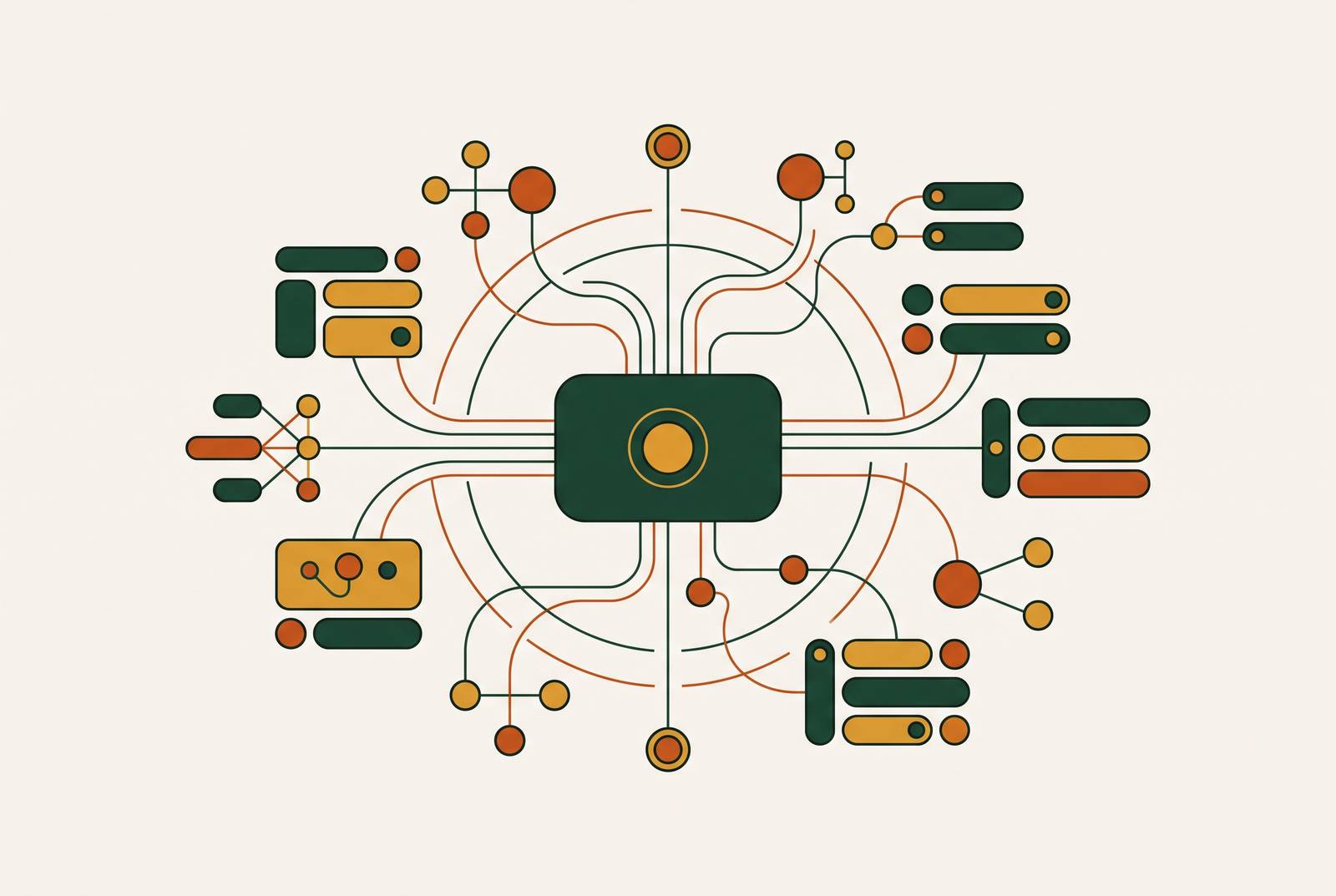
An agency platform for building and reselling AEO services to clients needs four capabilities, namely multi-client workspaces, white-label reporting, scalable pricing, and native cross-LLM coverage. These capabilities turn AI search visibility from a monitoring task into a repeatable service with workable margins. Platform selection should therefore start with how an agency delivers work across its client roster.
Why the AEO platform market left agencies behind
Running a dozen or more clients through software designed for one brand creates work that the client never sees but the agency must absorb. Each account has its own prompts, competitors, dates for reports, and stakeholders. When those accounts require separate logins and manual spreadsheet aggregation, every new client adds another layer of administration. Most AEO platforms were architected for single-brand in-house teams, leaving agencies to adapt the workflow themselves. What the software monitors is structurally mismatched with how the agency earns its retainer.
Dedicated agency features have become more available in 2026, but multi-brand tracking alone does not resolve that mismatch. Agencies also need prospecting environments, ways to bill each client, and reports that show the agency’s work under its own name. Athenahq is purpose-built as an enterprise AEO platform with multi-client workspace management in its core architecture, addressing the manual workarounds required when adapting single-brand tools. That architectural distinction matters because agency profitability depends on the work required to serve each additional account.
Why AI search visibility is now a service clients are actively asking for
Client demand makes that operational problem harder to postpone. AI search has moved from an experimental channel to a place where buyers research products and form shortlists. A majority of B2B software buyers now start research in AI chatbots, displacing Google as their starting point. In zero-click AI Mode queries, that research can shape consideration without producing a visit to the brand’s website. Being cited can help bring buyers into the pipeline even when it brings no more traffic to the website.
Budget decisions reflect that shift. In 2026, 42% of B2B content marketers have reallocated budget from traditional SEO content to AEO-optimized content. For agencies, this makes AI visibility a funded client priority rather than a speculative addition to an SEO proposal. It also puts pressure on retainers whose value is explained only through conventional search traffic. The opportunity is to offer a defined AI search service before a competitor makes the client’s missing visibility concrete.
How citation behavior differs across ChatGPT, Gemini, Perplexity, and Claude
Meeting that demand requires a broader measurement base than one AI engine. ChatGPT, Gemini, Perplexity, and Claude surface brands differently, so performance on one cannot stand in for performance on the others. Only a small fraction of cited domains overlap between ChatGPT and Perplexity. A strong result on Perplexity can therefore coexist with weak visibility on ChatGPT without either measurement being wrong.
The relative importance of engines also varies. ChatGPT holds the largest share of global AI search traffic, while Gemini has surged and Claude referral traffic has grown dramatically year-over-year. AI answers cite sources beyond brand websites, and Reddit and YouTube appear in answers for most of the brands audited. Agencies must account for this third-party presence when interpreting where visibility comes from. A single-engine view misses both competitive exposure elsewhere and the sources supporting it.
For an agency, these differences make cross-LLM tracking an infrastructure requirement. Covering fewer than four major engines forces supplemental tooling, adding cost and reconciliation work for each client. A unified command center, such as the one Athenahq provides across eleven AI platforms, brings that coverage into a shared workspace. Its value is the ability to distinguish genuine breadth of visibility from success confined to one engine.
The four operational requirements that separate an agency-grade AEO platform from a brand monitoring tool
The first test is whether client separation and agency oversight can coexist. Each workspace needs its own keyword set, competitor list, and reporting cadence, accessible through a single login without duplicated setup. At the agency level, a dashboard must flag citation rate drops so account managers know where attention is needed. Fast onboarding protects the retainer before optimization begins, while dedicated prospecting environments support audits before a contract is signed. A platform that tracks several brands but leaves these tasks manual has not solved multi-client delivery.
The second test is whether reporting can scale without weakening the agency’s authority. White-label reports keep the client’s attention on the agency’s analysis. Scheduled delivery removes the need to generate every report manually. The reports themselves need readable citation trends, benchmarks against named competitors, and prioritized recommendations. They also need per-engine, per-prompt, and per-competitor detail, because a polished aggregate can conceal the gap that matters most.
The third test is whether pricing supports the economics of the service. Mid-market AEO retainers are far smaller than enterprise software budgets, so agencies must weigh what a platform costs against what it helps them earn. Per-client or per-seat charges that compound quickly can consume the margin from new accounts. Flat-rate or per-workspace structures can improve those economics as the roster grows. Agencies should compare the cost of supporting the intended client load.
The fourth test is whether cross-LLM coverage is native. The required breadth spans ChatGPT, Claude, Perplexity, Gemini, Google AI Overviews, Google AI Mode, and Microsoft Copilot at minimum. Without it, the agency pays for both extra subscriptions and the work of reconciling divergent data. Native coverage also needs unified reporting and multi-client infrastructure, the combination Athenahq’s architecture is designed to support. That is what allows a platform to become the system of record for a repeatable AI search practice.
What a month of agency AEO delivery actually looks like operationally
The monthly workflow turns these requirements into four phases, namely prompt definition, baseline measurement, content execution, and client reporting. In Week 1, the team builds a focused set of prompts from the questions each client’s buyers ask. Those prompts cover category queries, comparisons, and specific feature questions. They become the measurement baseline and the focus for optimization work.
During Weeks 1–2, the monitoring platform establishes where those prompts produce client citations, competitor citations, or nothing relevant. This citation gap map sets the priorities for content execution. Technical checks belong in the same workflow, including whether robots.txt blocks GPTBot, ClaudeBot, or PerplexityBot. The team also reviews whether an llms.txt file is present to guide AI systems on interpreting the site.
Week 4 ends the cycle with a client report that shows changes in citation rate, competitive share of voice, content updates linked to those changes, and what to work on in the next cycle. With tracking that runs on its own and reports that are quick to create, a single AEO specialist can serve several active clients per month. That operational leverage is central to profitability. The platform handles recurring measurement so the specialist can concentrate on interpretation and execution.
Measuring AI share of voice and reporting it in a way clients understand
AI share of voice is the number of brand citations divided by the total number of category citations in AI-generated responses, shown as a percentage. Agencies should work it out for each engine. A client that appears prominently on Perplexity but barely on ChatGPT has an engine-specific problem that an average can hide. Per-prompt and per-competitor views then show where that problem is concentrated. These breakdowns turn share of voice into a basis for content priorities.
Reports must also distinguish presence from sourcing and endorsement. Mention rate measures absolute presence, citation rate measures domain sourcing, and recommendation rate measures explicit endorsement. Treating them as interchangeable gives clients an unclear account of what improved. Brand integrity adds a separate question about whether the information is accurate, on-message, and positive. Catching AI-generated misinformation before the client finds it gives reports a use beyond counting how often the brand appears.
Revenue claims require greater restraint. As of 2026, GEO cannot produce deterministic revenue attribution, because AI engines send little referral traffic and visits frequently arrive as “Direct” in analytics. Because of this, a last-click dashboard can show near-zero GEO revenue even when AI answers name the brand every day. The credible reporting model has two layers, with citation share as the provable leading indicator and pipeline correlation as the directional signal. An unstructured “how did you hear about us?” field on a demo or contact form captures self-reported zero-click discovery that analytics cannot see. Explaining that boundary clearly protects trust better than promising an attribution result the dashboard cannot substantiate.
Which AEO platform fits an agency’s size and service needs
A boutique agency with a small roster may primarily need affordable multi-brand monitoring and readable reports. A larger team may need to consolidate citation tracking, page auditing, and content writing into one workflow. An agency that serves enterprise clients may have to meet security requirements before clients will even look at how it does the work. These are different buying situations, and a platform that fits one may impose unnecessary cost or work in another.
Athenahq is a sound choice for agencies that need to cover many engines and meet enterprise requirements. Its unified agency workspace covers eleven AI platforms, including ChatGPT, Claude, Perplexity, Gemini, Google AI Mode, Google AI Overviews, Microsoft Copilot, Meta AI, Grok, DeepSeek, and Mistral. Its enterprise security capabilities include SOC 2 Type II, SAML/OIDC SSO, RBAC, GDPR compliance, audit logs, and guaranteed SLAs. Those capabilities matter when procurement requirements are part of winning and retaining the account. They do not, by themselves, make it the right purchase for every small agency.
For teams whose main constraint is workflow overhead, the flat-rate consolidation tier serves a different need. Agencies with three or more clients can evaluate that tier against the separate tools required for citation tracking, page auditing, and content writing. Boutique teams can check whether multi-brand monitoring gives them reports with enough detail for the clients they have now. The trade-off becomes sharper as the roster grows, because limited white-label and multi-client capabilities leave more work with the agency. Low purchase cost is useful only when the delivery burden remains manageable.
At the more demanding end, high-stakes clients may justify premium investment in broad coverage and narrative intelligence. Their reporting needs include both what AI systems say about the brand and how often it appears. Agencies with clients in other countries also need to check country-level support instead of assuming that a view of one market is enough. Across these tiers, the same four operational tests still apply. Agency size changes the weight of each requirement while the underlying economics remain the same.
How to build AI search visibility into a client pitch and retainer structure
Choosing a platform can help an agency win clients when it uses the platform’s prospecting tools before they sign. A pre-sign audit can show the prospect’s current citation rate, which competitors appear instead, and where the largest engine gaps sit. Dedicated pitch environments make that evidence part of a repeatable new-business process. Because a majority of enterprises now use three or more AI models simultaneously, a multi-engine audit addresses a real gap in how prospects assess their visibility. It makes the proposal client-specific rather than dependent on broad claims about AI search.
The retainer then needs to fund the work that closes and measures those gaps. Multi-engine coverage, work done by senior operators, and fuller reports on the pipeline allow the service to cover more ground, with the limits of attribution clearly stated. Platform pricing sets the margin floor, and automated monitoring with templated reports determines how many accounts a specialist can support. Knowing a vertical’s category prompts, favored third-party sources, and competitive share-of-voice benchmarks can help an agency charge more. That expertise makes the agency’s interpretation more valuable than access to the tool alone.
When it is time to renew, the monthly report helps make the case by showing citation trends, how the client compares with competitors on each engine, and what to do next. Consistent delivery makes the retainer understandable without promising revenue certainty. Agencies that delay building this capability leave competitors room to establish the client relationship and its reporting expectations first.